

Macmillan
Bringing a sustainable lens to fundraising packs
How we helped Macmillan make its Challenge Packs more sustainable
National charity Macmillan Cancer Support is on a mission to give the best possible care to those with cancer. It carries out multiple fundraising activities as part of that mission, including sending out fundraising packs across the country.
Macmillan approached Linney to review whether its Challenge fundraising packs could be more sustainable and cost-effective. As a champion of sustainable innovation, we were delighted to help Macmillan find an alternative solution that maintained the overall quality whilst also matching expectations for the packs.
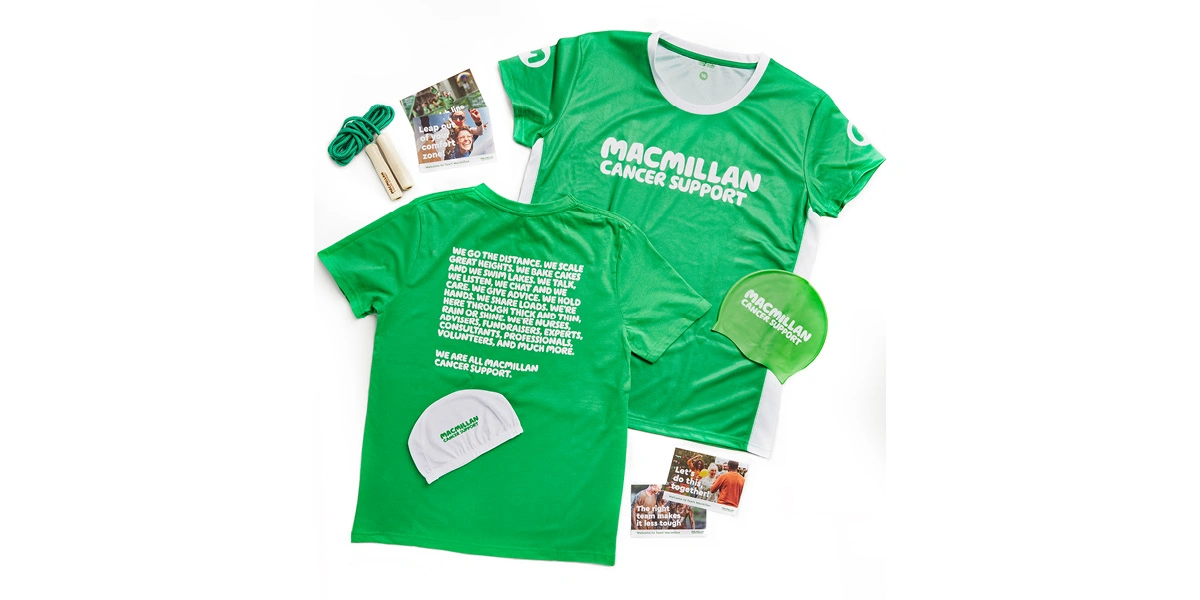
Finding a flexible solution
With three variations of the packs, each with a different combination of collateral to send out, depending on the fundraising event discipline, it was important that the end solution still offered flexibility when fulfilling the pack.
Our solution was to look at ways to reduce the amount of bespoke collateral sent out as part of the packs. Typical items included a personalised letter, fundraising pack, and kit (often bespoke to a particular fundraising campaign, such as T-shirts and iron-on numbers). The fundraising pack alone had more than five pieces of paper in an A4 folder.
The revised versions of the packs included three options, all with a significant reduction in the amount of paper used:
Option 1 – a standalone A6 postcard
Options 2 and 3 – an A6 postcard and up to 10 kit items
The revised pack designs continue to offer Macmillan the flexibility to add bespoke kit items, dependent on the requirements of the campaign.

Finding a more environmentally friendly packaging solution
With Macmillan keen to ensure the packs were more sustainable, we looked for more environmentally friendly packaging that would still deliver well to the end customer. Previously all the challenge packs were sent out in plastic poly bags. Instead, we proposed biodegradable poly bags and compostable poly bags that would have less impact on the environment when no longer in use.
The environmental impacts
Macmillan accepted the revised pack options, which saved 4.3 tonnes of paper and several thousand pounds in a year. Changing option 1 to a communication piece, requiring no packaging, reduced overall outer packaging requirements by 23%.